
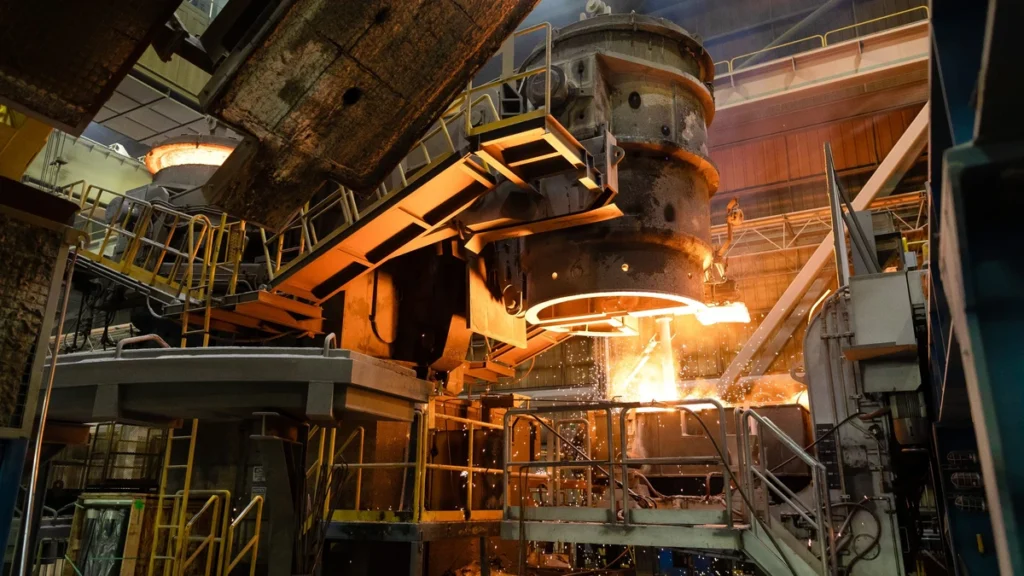
Generation Steel plans to spend A$850 million on an electric arc furnace in Collie, Western Australia, which would make it the first new steel mill built anywhere in Australia in more than 35 years. It is one of at least five green steel projects across Western Australia, New South Wales and Queensland now racing to start production by 2030, and most of them are chasing the same customer: builders who currently buy reinforcing steel from Asia.
That import habit has grown since September, when the 60-year-old blast furnace at the Whyalla Steelworks in South Australia was shut down for good. Whyalla supplied most of the country’s structural steel and all of its domestically made rail steel. With the furnace cold, the developers promising cleaner steel have aimed their pitch squarely at imports.
Why Australia Is Buying More of Its Steel Abroad
The Whyalla furnace had been offline since April before its administrators, KordaMentha, confirmed it would not be restarted. About 500 employees are losing their jobs, plus another 100 labour hire workers, according to Australian Associated Press. South Australian Premier Peter Malinauskas blamed the plant’s previous owner, Sanjeev Gupta’s GFG Alliance, for running the furnace down; GFG has said Whyalla’s problems began long before it arrived and did not end with its removal.
The furnace mattered beyond the town. Seventy-five per cent of the nation’s structural steel came from Whyalla, and the plant is the only domestic maker of rail steel, ABC News reported. Its rolling mills keep running on stockpiled and bought-in semi-finished steel, but the steel itself is no longer made there.
How long that gap lasts is disputed. “The earliest, realistically to make steel, I think we’re closer to five years,” Shane Karger, a South Australian organiser at the Australian Workers’ Union, told the ABC’s 7.30 programme. Experts quoted by the ABC in September estimated two to four years, Whyalla’s mayor Phill Stone said three to four, and state Treasurer Tom Koutsantonis said he expected steelmaking to return within a couple of years.
The timetable depends on a sale. The two remaining bidders are the Indian steelmaker Jindal Steel and M Resources, the Australian coal business run by Matt Latimore, while BlueScope Steel holds a right of last offer. The state and federal governments have pledged almost A$2 billion to help a new owner build an electric arc furnace at Whyalla, the same cleaner technology the newer projects are planning elsewhere.
Who Is Building the New Mills, and Where
Generation Steel, formerly known as Green Steel WA, is the furthest along in public detail. Its Collie mill would recycle Australian scrap into reinforcing bar, known in the trade as rebar, as well as wire rod and merchant bar, with a target capacity of 450,000 tonnes a year, according to RenewEconomy. The company says the design turns scrap directly into finished rebar in one continuous line, skipping the separate step of casting, cooling and reheating a steel billet.
“Rather than producing a billet using energy, then cooling it down, then transporting it somewhere else, then rolling it, you can actually do that all in a continuous process,” co-founder Rajan Aggarwal told the ABC. He said the approach improves energy efficiency by about 80 per cent.
In Queensland, Future Forgeworks has proposed a mill near Ipswich, outside Brisbane, and is one of three rival projects in that state alone. In New South Wales, Greensteel Australia is the only company in the race to have locked in a final investment decision, for the first stage of a mill on the site of the former BHP Newcastle Steelworks. It will start by processing imported steel from South East Asia rather than domestic scrap, the ABC reported on 13 November.
Australia already has electric arc furnaces recycling scrap at Laverton in Victoria and Rooty Hill in New South Wales. What is new is the number of projects, the promise to run them on renewable power, and the target market: imported rebar used in bridges, homes and almost anything built with concrete.
Scrap Is the Raw Material Everyone Wants
An electric arc furnace melts recycled steel with electricity instead of smelting iron ore with coal, and proponents say the method can cut the carbon footprint of steelmaking by up to 90%. That makes scrap the critical input, and much of Australia’s scrap currently leaves the country. Almost 600,000 tonnes were exported through Fremantle Port in Western Australia in 2025-26, and some of it may come back as imported steel products, according to the ABC.
Queensland exports roughly 60% of its scrap, said Rohan Richardson, chief executive of Future Forgeworks. “If our scrap metal right now leaves QLD, it goes all the way to Asia; it’s processed there,” he told the ABC. “With logistics reduction and the modern processing facility, our production costs can compete with Asia.”
He also acknowledged the obvious tension. With three projects competing in Queensland, there is only so much scrap to go around, and Richardson said that would create an imbalance between supply and demand. For investors, that is the question to watch: each business case depends on securing enough local scrap at a price that undercuts imported rebar, and with several projects drawing on the same pool, not every plan can be met at full capacity.
What Green Steel Costs, and Who Pays
The projects are pitching on price, not on a green premium. Aggarwal said there was a misconception that green steel had to be a premium-priced product, and the developers are targeting price parity with imported rebar from Asia, which already carries tariffs. His argument rests on two local advantages: plentiful scrap from heavy industry and low-cost power from renewables.
Power is where Generation Steel has moved first. It has signed an agreement with BHP to take electricity from the Flat Rocks wind farm and the Merredin solar farm, capacity BHP had lined up for a Western Australian nickel expansion it has since abandoned, at least for the time being. At full output the mill would need around 250,000 megawatt hours a year, or close to 100 megawatts of wind and solar capacity, with the contracts starting in 2029. That is around the time Collie’s remaining coal-fired power stations are expected to close.
The financial case is still unproven. The ABC notes that green steel has drawn significant publicity and funding but has yet to be proven financially viable, and Whyalla is the cautionary tale. Gupta took over the plant in 2017 promising a global green steel hub by 2030; what followed was heavy losses, job cuts and the closure of the furnace. When the South Australian government put the steelworks into administration in February 2025, it was losing A$1.5 million a day, the ABC reported.
The Factory Floor Around Them Is Under Strain
The new mills are being planned in a weak market for Australian manufacturers. The Australian Industry Group (Ai Group), an employer association whose industry index has run since 1992, said its manufacturing index fell 13.4 points to minus 20.1 in October, where any reading below zero signals contraction. Its metals index stood at minus 22.2 and has hovered in the mid-minus 20s for 18 months, with members citing competition from lower-cost imports, according to the group’s Australian Industry Index for October.
The machinery and equipment index fell 25 points to minus 43.2, the lowest reading in the history of the series. Input costs were the biggest drag on business, cited by 29% of respondents, as higher fuel prices passed through supply chains, and conflict in the Middle East disrupted shipping. Ai Group chief executive Innes Willox has warned that the longer Whyalla stays idle, the more skill and capability the country will lose and the more it will rely on imported steel to fill the gap.
Green Iron Is the Bigger Prize
Recycling scrap is only half of the opportunity. The larger contest is over green iron, or direct reduced iron, which uses hydrogen or natural gas instead of coking coal to strip oxygen from iron ore. The method suits higher-grade magnetite ore, which is harder to mine and process than the lower-grade hematite most Australian miners produce. Fortescue’s pilot plant at Christmas Creek in the Pilbara produced its first molten metal earlier this year, and Generation Steel has struck a deal with Rio Tinto to process small amounts of green iron from a pilot plant at Kwinana at its Collie mill.
Tim Buckley, director of the think tank Clean Energy Finance, called green iron the holy grail for Australia’s exports. “That could potentially double or triple the value per tonne of the iron ore we’re exporting,” he told the ABC. Demand signals are building abroad: the European Union has introduced a carbon charge on imports at its border, and China expanded its national emissions trading scheme to cover steel.
What Decides Which Mills Get Built
Three things will separate the projects that pour steel from those that stay on paper: secure scrap supply, contracted renewable power at a stable price, and buyers willing to sign long-term rebar contracts against cheaper imports. Generation Steel has the power contract. Greensteel Australia has the investment decision. The others have yet to reach a final investment decision.
The Whyalla sale is the other variable. Its buyer will decide how quickly a large electric arc furnace arrives in South Australia, and AAP reported that the sale was expected to be finalised by the end of 2026. “It is incongruous to me the idea that Australia could be the world’s biggest iron ore exporter and then not know how to use the stuff,” Malinauskas said when the furnace closure was confirmed. DailyBusiness.News covered the closure itself in September, when the Whyalla Steelworks furnace went cold and took 600 jobs with it; the green steel race is one answer to the gap it left.
About The Author


More Stories
Why Small Firms Feel the Bank of England Rate Rise Twice
US GDP Grew 3.4% but Consumer Spending Stalled in September
The Gold Price Gave Back $1,570 an Ounce in Nine Months