
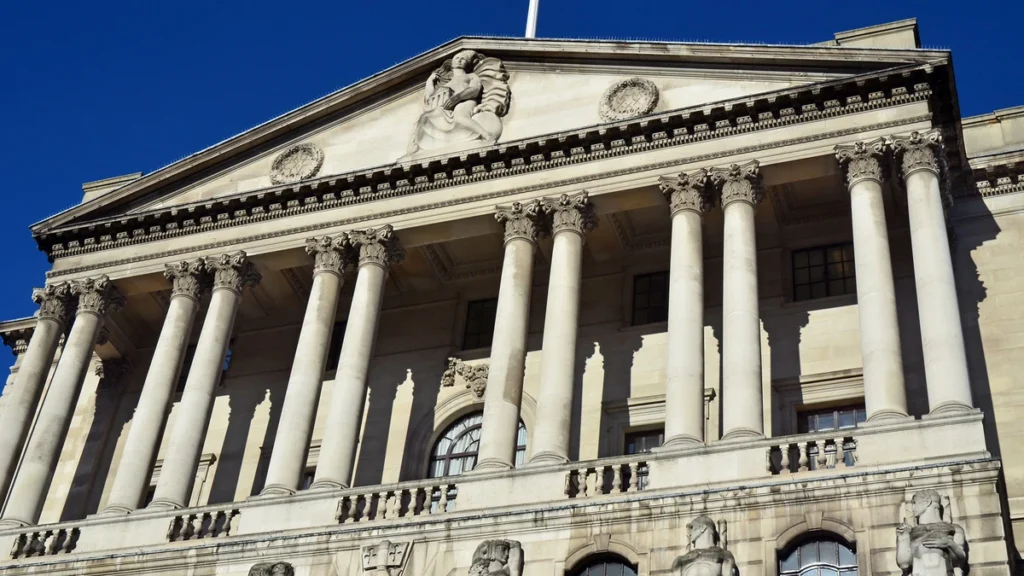
The Bank of England on Threadneedle Street in the City of London. Photo: Images George Rex / Wikimedia Commons
The Bank of England on Threadneedle Street in the City of London. Photo: Images George Rex / Wikimedia Commons
The Bank of England raised its main interest rate by a quarter of a percentage point to 4% on Thursday 5 November, the UK central bank’s first increase since August 2023. For the country’s small business owners, the Federation of Small Businesses (FSB) argues, the Bank of England rate rise will be felt twice: once in the cost of the firm’s own borrowing, and again in the mortgage on the family home.
“For a small business owner juggling a business loan, commercial mortgage and mortgage on their own home, the impact of higher interest rates is felt both at work and around the kitchen table,” said Tina McKenzie, the FSB’s national chair, in comments published by SMEweb. What follows sets out what changed, who pays first, and what lenders, economists and business groups expect from here.
What the Bank of England Decided and Why
Bank Rate, the Bank of England’s main policy rate, feeds through to the interest that UK banks charge on loans and pay on savings. It rose from 3.75% to 4%. The Monetary Policy Committee, the nine-member panel that sets the rate, voted 8-1 for the quarter-point move, CNBC reported. The one dissenter, Catherine L Mann, voted for a half-point rise to 4.25%, arguing that “from a risk management and credibility perspective, a 50-basis point hike in Bank Rate is ‘good policy’.”
The Bank tied the decision to energy. In its published summary, it says conflict in the Middle East has disrupted the transport and supply of energy, raising prices and pushing up households’ motor fuel costs and utility bills. UK inflation rose to 3.5% in September, and the Bank expects it to climb to about 5% by mid-2027 as higher energy costs feed through, for example when businesses raise their own prices to cover bigger bills. It also noted that the economy has been more resilient than expected, which it called good news but said adds to the risk that energy costs spill into other prices.
Governor Andrew Bailey tried to cap expectations in both directions. “Today’s increase shouldn’t be seen as the first in an inevitable long sequence of hikes,” he said. “But, unless the conflict in the Middle East is resolved, neither does it seem likely to be the last increase.” Markets were not surprised: ahead of the announcement, traders had priced in a more than 99% chance of a rise, according to LSEG data cited by CNBC, along with roughly a one-in-four chance of another increase in December.
Where Business Borrowers Feel It First
For companies, the rise lands on the cost of credit. SMEweb’s guide to the decision lists loans, business credit cards and commercial mortgages as the products where small firms can expect higher charges. How quickly that happens depends on the facility: borrowing priced off Bank Rate moves soon after a change, while fixed-rate debt only reprices when the deal ends and the business refinances.
Many smaller borrowers were already paying a premium before Thursday. “Two in five small business borrowers were already facing interest rates of 10 per cent or more last quarter, suggesting many lenders had anticipated a rise,” McKenzie said. She also pointed to fuel as the dominant cost pressure, with more than half (53%) of small firms naming it as their biggest rising cost, before any change in interest rates is counted.
The FSB’s main request is aimed at lenders rather than the Bank. “Banks have a vital role to play in helping small firms through this period,” McKenzie said. “That means making credit more accessible, particularly overdraft facilities, which have become harder to come by in recent years. Small businesses need the flexibility to manage their cash flow, not fewer options when money is already tight.” She added that there are 100,000 fewer small and medium-sized enterprises in the UK economy than at the start of 2025.
The Second Hit Lands at Home
The household side of the squeeze is easier to measure. According to analysis by data firm Moneyfacts, reported in MoneyWeek’s live coverage of the decision, a borrower with a £250,000 tracker mortgage on a 25-year term will pay around £37 a month more after a 0.25 percentage point rise. A tracker mortgage follows Bank Rate directly, so it moves first. A standard variable rate, the default rate a lender charges once an introductory deal ends, also tends to rise, though usually less immediately. Homeowners on fixed-rate deals see no change until their fix expires.
Much of the rise was already in the price of new fixed deals. “The increase had been expected for weeks and was already reflected in fixed mortgage pricing, which is why several lenders were cutting rates in the days before the announcement,” said Nick Mendes, mortgage technical manager at the broker John Charcol.
For an owner-manager, those two effects stack: a variable-rate facility at work and a tracker or expiring fix at home can both reset within months of each other. That is the double hit McKenzie described, and it is why business groups frame the decision as a cash flow question as much as an investment one. There is a modest offset for owners with cash on deposit, as savings rates may edge up, although MoneyWeek notes that many banks priced the rise in early and that the tax rate on savings interest is due to rise by four percentage points from April 2027.
Why Business Groups Say the Timing Hurts
The British Chambers of Commerce (BCC), which represents local chambers of commerce across the UK, accepted the Bank’s reasoning but questioned the diagnosis. “With inflation forecast to hit 5% next year, the Bank wanted to show it will act to stop price increases becoming entrenched,” David Bharier, the BCC’s deputy director, said in its response. “But the current rise in inflation is largely driven by energy costs from the conflict in Iran, not an overheating economy. Our data shows that now only 17 per cent of firms are increasing investment.”
Bharier added that there was “little sign of the wage-price spiral the Bank is looking to guard against”, noting that unemployment is higher than in 2022 and the labour market is looser. “A rate rise is an insurance policy against the spiral,” he said. “But after a Budget which gave businesses little incentive to invest, and with borrowing costs already high, it is economic growth that will pay the premium.”
Regional chambers made the same point about investment. Scott Knowles, chief executive of the East Midlands Chamber, said in a statement that “businesses considering borrowing so they can invest to grow will see this rise in the interest rate to 4% as a hindrance to their investment plans.” He said the Autumn Budget a week earlier had delivered “some welcome incentives for founders and startups, and extended relief for hospitality and retail around business rates”, the UK’s property tax on commercial premises, but not the larger cuts to employment costs, corporation tax and regulation that the chamber has called for.
What Markets and Economists Expect Next
Financial markets had moved before the Bank did. After the decision, the yield on the benchmark 10-year gilt, as UK government bonds are known, was about 5.15%, and the 2-year yield about 4.78%, according to CNBC. The pound, which hit a post-Brexit high the day before, was flat against the US dollar and the euro. MoneyWeek reported the FTSE 100, the index of the largest companies listed in London, about 0.6% higher on the day.
Economists disagree mainly on what comes next. Sanjay Raja, chief UK economist at Deutsche Bank, told MoneyWeek he does not see “the start of a long hiking cycle”, arguing that the hike “merely adds a dose of policy restriction to an already restrictive policy stance”. The bank expects one further rise, to 4.25%, at either the December or February meeting. Suren Thiru, chief economist at the Institute of Chartered Accountants in England and Wales (ICAEW), read the vote and the tone of the Bank’s minutes as a “sizeable shift” and said a February rise looks “increasingly likely” unless energy prices start to retreat.
Scott Gardner, investment strategist at JPMorgan Personal Investing, called the move “hugely symbolic”. “This is a 180-degree turn from the start of the year when many believed interest rates would come down as UK inflation had been mostly tamed,” he said. Bailey himself, in the November Monetary Policy Report, said that without news that softens the inflation risks, “I can see the argument for a further increase in rates and thereafter taking a more conditional approach, dependent on the evidence on energy prices and inflation dynamics.”
The Dates UK Business Owners Should Mark
The next Bank of England decision is due on 17 December, and the first of 2027 on 4 February. Between now and then, the deciding variable is outside the Bank’s control: energy prices and the course of the conflict that has driven them. If they ease, the business groups argue, the rise may prove premature; if they do not, the economists quoted above expect at least one more increase.
For owners, the practical questions are already clear. Which facilities move with Bank Rate and which are fixed, when each fixed deal ends, how much overdraft headroom the business has, and how a rise in the owner’s own mortgage payment changes what they can draw from the company. None of that requires a forecast, only a list.
The cost of business credit is under scrutiny in other markets too. In New Zealand, our recent report found that capping commercial credit card fees saves New Zealand firms $40m on paper. In the UK, the bill from this Bank of England rate rise will arrive through the same small set of channels, on business loans, overdrafts and commercial mortgages, and at home.
About The Author




More Stories
US GDP Grew 3.4% but Consumer Spending Stalled in September
The Gold Price Gave Back $1,570 an Ounce in Nine Months
Capping Commercial Credit Card Fees Saves NZ Firms $40m on Paper