
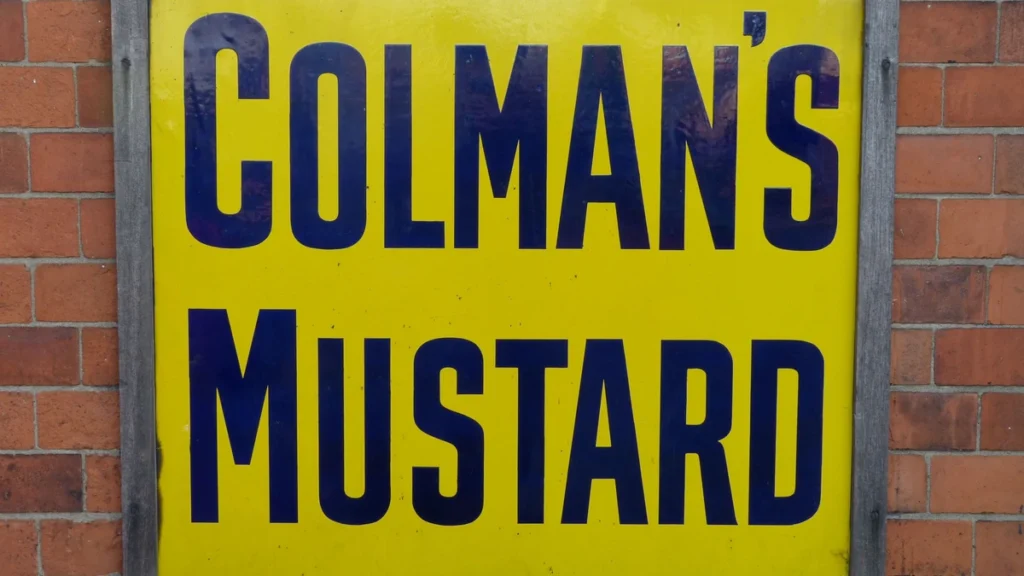
Colman’s holds more than half the UK mustard market. That is the reason it is for sale, and it is worth pausing on how unusual a sentence that is.
A brand is normally divested because it underperforms, distracts, or no longer fits. This one is being marketed because it works too well in a category the buyer is already in.
The Overlap Is the Whole Problem
Unilever is combining its food business with McCormick, and McCormick already owns French’s. Put Colman’s into the same group and the enlarged company controls both the dominant British mustard and a globally recognised American one.
Rather than wait for a regulator to raise it, Unilever has moved first. A company spokesperson said a decision had been taken “to market the Colman’s brand and assets to potential buyers in order to proactively seek to address potential competition concerns from the planned combination of Unilever Foods and McCormick”, adding that “discussions are ongoing and the operations continue as usual”.
That is a carefully built sentence. It commits to a process, not an outcome, and it frames the sale as pre-emptive rather than remedial, which matters if the point is to shorten a regulatory review rather than respond to one.
A 212-Year-Old Brand With a Structural Problem
Colman’s was founded in Norwich in 1814 and has been a household name in Britain for most of that time. It is the undisputed leader in the category, commanding more than 50% of the market nationally.
Its weakness in this transaction is geography rather than performance. Dan Coatsworth, head of markets at AJ Bell, put it directly: Colman’s “is synonymous with a Sunday roast or a ham sandwich in the UK but is less known beyond these shores”, and McCormick “might believe the British brand doesn’t cut the mustard or add significant value to its portfolio” given it already owns French’s and a range of related sauces and powders.
So the brand is simultaneously too strong to keep, on competition grounds, and too domestic to be strategically essential to an American acquirer. Both things being true at once is what makes it saleable.
It also explains why this particular remedy was available. Divestment only works as a fix when the asset can survive outside the group, and a brand with dominant share in a single national market is unusually well suited to standalone ownership. A product that depended on the parent’s international distribution would be far harder to hive off without destroying the thing the regulator wanted preserved.
What Is Actually Moving to McCormick
The transaction Colman’s is being cleared out of is substantial. Unilever agreed in March to sell its historic food division to McCormick in a deal reported at £33 billion.
The brands crossing over include Marmite, Knorr, Hellmann’s, Frank’s RedHot and Pot Noodle. Chief executive Fernando Fernandez is pivoting Unilever towards beauty, wellbeing and personal care, and the food division is the thing being pivoted away from.
The structure is not a straight sale. Existing Unilever shareholders retain a 65% stake in the newly formed company, with McCormick controlling the remaining 35%. RetailDetail describes it as a joint venture, which is a fair reading of a 65-35 split, and it explains why Unilever is doing the regulatory groundwork rather than leaving it to the buyer. It remains substantially exposed to the outcome.
Rothschild, and No Price
Bankers from Rothschild have been tasked with finding a buyer, with the brand’s valuation reported as “unclear” at this stage.
Unclear is doing some work there. A forced-timing disposal of a category leader is an awkward thing to price: the seller has a deadline the buyer can see, which argues for a discount, while a brand with more than 50% share and two centuries of recognition argues for a premium.
Coatsworth expects interest regardless, and the logic is straightforward. A brand with that share in a stable category is a rare asset to come loose, and the reason it is available has nothing to do with its trading performance.
What the Buyer Is Actually Buying
The phrase in the Unilever statement is “the brand and assets”, which is broader than a trademark and narrower than a business.
For a bidder the questions are practical: what manufacturing comes with it, what supply agreements are needed from the McCormick group during transition, and how long the transitional arrangements run. Carve-outs of single brands from a large food business are rarely clean, because the brand has usually shared production, procurement and distribution with the parent for decades.
That is where the value leaks. A price agreed on the brand’s market share can be eroded quickly by the cost of standing up the supply chain that used to come free with the parent.
There is a second, less visible cost in the timing. A brand being publicly marketed under regulatory pressure spends months in a state its retail customers can read as clearly as its bidders can. Buyers at the major grocers negotiate range and promotional terms on annual cycles, and a supplier whose ownership is unresolved is in a weaker position across that table than one whose is settled. None of that shows up in a valuation, and all of it shows up in the following year’s trading.
The Regulatory Clock
The purpose of moving now is timing. A remedy offered before an authority demands one can shorten a review; a remedy extracted during one usually lengthens it.
Whether it succeeds depends on whether the divestment is judged to remove the overlap cleanly. A sale to a credible operator with the capability to compete does; a sale to a financial buyer with no route to market may not satisfy the same test.
That is why the identity of the buyer matters more than the price to everyone except Unilever’s shareholders. A remedy is assessed on whether it restores the competitive constraint that the merger would otherwise remove. Selling a market-leading brand to an owner unable or unwilling to invest behind it removes the overlap on paper while leaving the category weaker in practice, and authorities have grown considerably less tolerant of that outcome than they once were.
The Credit Protection Association’s briefing noted the same competition rationale in reporting the story, flagging that Colman’s is expected to be sold precisely because McCormick already owns French’s.
A Small Brand Inside a Large Question
Mustard is a modest category to be holding up a multi-billion-pound reorganisation, and that is rather the point.
Large combinations are not usually blocked outright. They are conditioned, and the conditions attach to the narrow places where two portfolios genuinely overlap. Everything else in the Unilever food business, from Marmite to Pot Noodle, faces no comparable objection. The mustard shelf does.
It is also a reminder that share of a national market, the thing brand owners spend decades building, becomes a liability the moment ownership changes hands into a rival portfolio. Dominance is an asset to the incumbent and an obstacle to the acquirer, and the same percentage drives both readings.
For anyone watching corporate structure rather than condiments, that is the transferable lesson. In a deal of this size the regulatory risk rarely sits in the headline brands. It sits in the one product line where both parties are already strong, and it gets resolved by selling the thing that works.
About The Author






More Stories
The Whyalla Steelworks Furnace Went Cold and Took 600 Jobs With It
Government Borrowing Overshot the OBR by £3.5bn in One Month
Is the Bank of England One Meeting Away From a Rate Rise?