
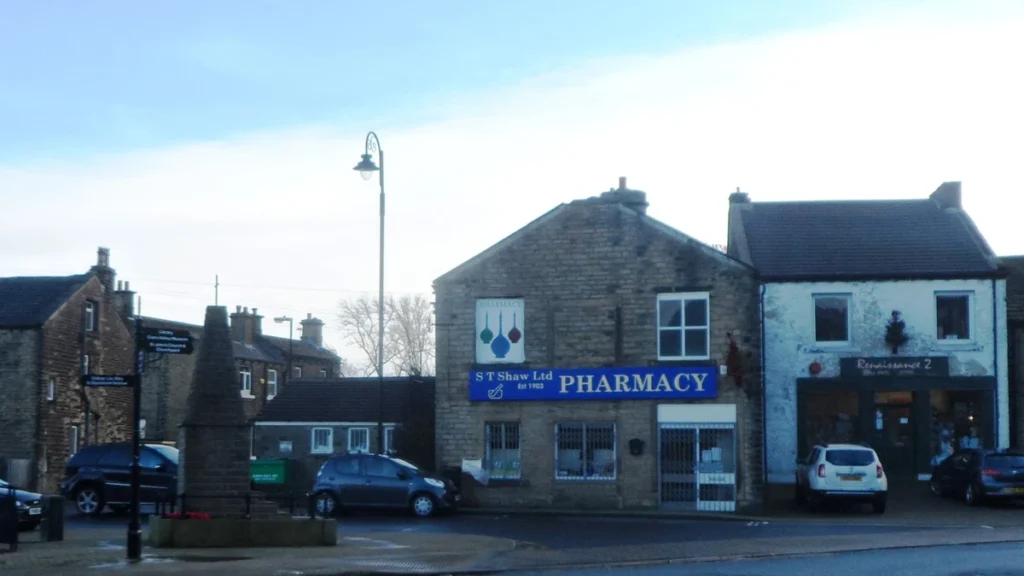
Two hundred and one pharmacies told their trade body they are considering closing, and the reason was not the NHS contract. It was the rates bill.
The National Pharmacy Association polled 420 pharmacies and found 48% weighing closure, 55% considering a move to cheaper premises, and 92% saying their current bill prevents them investing in new services, their workforce or their buildings.
Some owners reported their bill tripling in recent months. For pharmacies in areas with higher rateable values, the association says that means tens of thousands of pounds more a year.
What the Sample Does and Does Not Prove
Take the number seriously and read it carefully at the same time.
Four hundred and twenty responses is a trade body polling its own members, and the pharmacies most affected by a rates increase are the ones most likely to answer a survey about rates. This is advocacy data, and the NPA is openly campaigning for an exemption.
What it is not is invented. The 92% figure is the most robust in the set because it describes a decision already made rather than one contemplated: not investing is something a business either did or did not do this year, while closing is a plan that many of the 201 will not follow through.
The proportion considering relocation, 55%, sits in between. Moving premises is expensive and disruptive for a business whose customers are local by definition, so a majority even entertaining it is a meaningful signal about the size of the increase.
A Business That Cannot Pass the Cost On
The reason a rates rise lands so hard here is structural, and it is different from every other shop on the same street.
Around 90% of a community pharmacy’s funding comes from the NHS, under terms the pharmacy does not negotiate individually. When a cafe’s costs rise it can add twenty pence to a coffee. When a pharmacy’s costs rise, the price of dispensing an NHS prescription does not move, because it was never the pharmacy’s price to set.
That makes a pharmacy something unusual: a private business carrying commercial property costs while earning most of its revenue at an administered price. Any input cost increase comes straight off the margin, with no pricing lever at all.
It also explains why the response options are so stark. A business that cannot raise prices and cannot reduce its statutory obligations has only two levers left, which are moving somewhere cheaper and stopping altogether. Those are exactly the two things the survey measured.
Pubs Got Twenty Per Cent, Pharmacies Got Nothing
The timing is what gives the survey its edge. It landed a month after a 20% business rates cut was announced for 32,000 pubs, clubs and live music venues, on the stated logic of backing the businesses people want to see in their communities.
Pharmacies were not included, and the sector said so immediately. The NPA’s chair, Olivier Picard, made the high-street argument directly: “Pharmacies across the country are the linchpins of their high streets, providing vital medicines and other services to their patients.”
He added that “soaring business rates have prevented them from investing in new services and forced some to relocate or close altogether, damaging local economies”.
There is a reasonable case for the pub relief on its own terms, and it does not require a view on pharmacies. But the two decisions sit awkwardly together, because the argument used for one applies at least as well to the other, and the pharmacy has the additional feature of being unable to raise its prices in response.
Smallest Network Since 2006
This is not a warning about a future decline. The decline is already measurable.
The NPA says the pharmacy network is now at its smallest since 2006, with 44 closures so far this year, and that nine in ten council areas have seen at least one pharmacy close since 2022.
That last figure is the one with the most information in it. A concentrated loss in a few struggling areas would be a local economic story. A loss distributed across nearly every council area is a sector-wide one, and it means the cause is common to all of them rather than specific to any high street.
The consequences fall unevenly. In a city, a closure means walking further. In an isolated rural or coastal community, where the association warns relocation could leave no pharmacy at all, it means a car journey for a prescription, which for the least mobile patients is the same as not having one.
The Policy Runs in Two Directions at Once
Underneath the rates argument is a contradiction that neither side of it created.
The NHS 10-Year Plan is built on moving care out of hospitals and into communities. Community pharmacy is one of the few pieces of that infrastructure that already exists, is already open long hours, and requires no appointment. It is difficult to shift care into community settings while the community settings are closing.
The same tension appears elsewhere in the current data. Employers are already absorbing more of the burden as workplace health shifts from the NHS to employers, and the cost of ill health outside the hospital system keeps rising.
None of this makes the business rates system wrong in principle. It is a tax on property occupation, and a pharmacy occupies property. The awkwardness is that the same government sets the pharmacy’s revenue and taxes its premises, and the two decisions are taken by different people who are not required to reconcile them.
Relocation Is the Quiet Half of the Story
The closure figure gets the attention, and the relocation figure may matter more.
Fifty-five per cent considering a move is a larger group than the 201 weighing closure, and moving is the option a rational owner reaches for first. It preserves the business, keeps the staff and stops the bill, all without the finality of shutting.
The catch is what a pharmacy is moving away from. Rateable value tracks desirability, so the expensive premises are the ones on the main parade, next to the bus stop and the GP surgery, where the patients already are. Cheaper premises are cheaper because fewer people pass them.
A pharmacy that relocates to save money therefore trades footfall for cost, and its retail income, which is the part it does control, falls with the footfall. That is a poor trade for a business already unable to price its main service, and it tends to be a one-way move because the original unit is re-let quickly.
There is a wider distortion in it too. A tax that rises with location value pushes the businesses least able to pass costs on towards the edges of a high street, while the operators that can raise prices stay in the centre. Over a few years that changes what a high street contains, without anyone deciding it should.
The NPA’s warning about isolated rural and coastal communities is the acute version of this. In a town with several pharmacies a move is an inconvenience. Where there is one, and the cheaper premises are three miles out, relocation and closure are the same event as far as the patient is concerned.
What an Exemption Would Actually Do
The NPA’s ask is specific: exempt pharmacies from business rates entirely.
It would work, in the narrow sense. Removing the cost removes the pressure the survey measured, and it would do so immediately rather than through a review cycle. It would also cost councils revenue at a moment when the ones losing pharmacies are frequently the ones with the least room in their budgets.
The harder question is whether it treats the cause. If the underlying issue is that dispensing revenue does not cover the cost of operating a modern pharmacy, then a rates exemption is a subsidy delivered through the property tax system to compensate for a shortfall in the health budget. That may still be the fastest available fix, and it is worth naming it accurately rather than describing it as tax reform.
For anyone running an independent pharmacy the near-term planning position is unchanged by the survey. Rates are due, the exemption is a request rather than a policy, and the 92% figure suggests most peers have already stopped spending on anything discretionary. The businesses that come through it will be the ones that treated the relocation option as a genuine calculation rather than a last resort, because the pharmacies that move early do so on their own terms and the ones that leave it until the accounts force it do not.
About The Author





More Stories
LearnUpon Secured $50m Without Selling a Single Share
La Cordée Is Closing With $13 Million Owed and 210 Jobs Lost
Pensioners Would Carry Half the Private Health Insurance Rebate Cut