
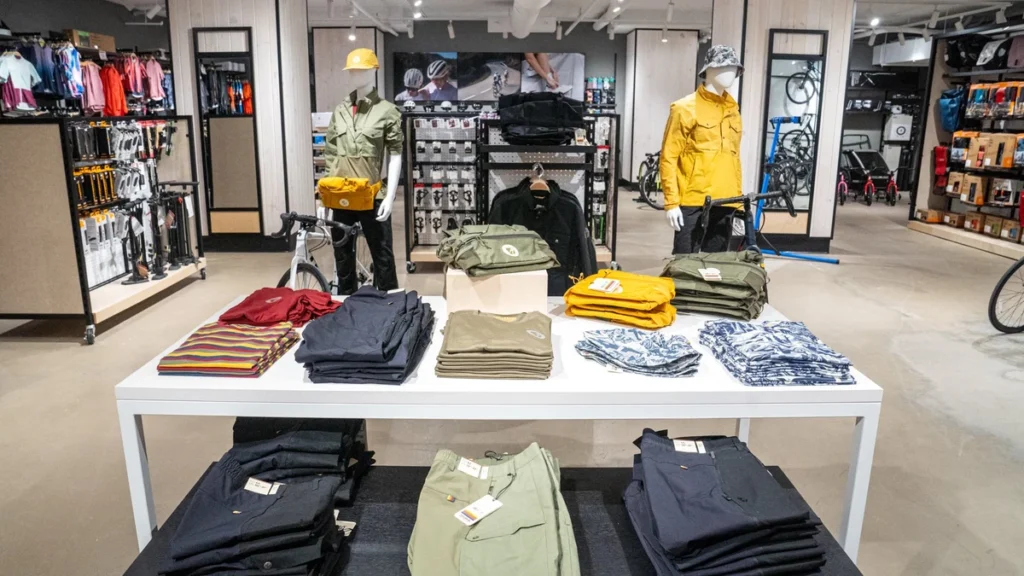
La Cordée, the Quebec outdoor retailer founded in Montreal in 1953, will close its last three stores in Canada in the coming weeks, ending a 73-year run that included two trips into creditor protection in six years. Closing sales are under way at its Saint-Laurent Boulevard store in Montreal, in Saint-Hubert on the city’s South Shore and at its La Vie Sportive store in Quebec City, after the company told customers on 30 September that it would cease operations. Its website notice, reproduced by SGB Media, was headed “THE END OF THE ADVENTURE”.
The costs are already on paper. La Cordée filed a notice of intention under Canada’s Bankruptcy and Insolvency Act on 11 July with more than C$13 million in obligations, and Quebec’s employment ministry has received six collective-layoff notices covering 210 employees whose jobs end between 4 August and 30 October.
What La Cordée Owes, and to Whom
The creditor list shows who carries the loss. According to preliminary creditor information reported in Quebec and summarised by Retail Insider, the largest secured creditor is lender Accord Financial, owed about C$2.98 million. Equip Outdoor Technologies Canada, part of the group behind the Rab and Lowe Alpine brands, is owed about C$1.9 million.
Below them sit 131 unsecured creditors owed roughly C$6.98 million between them, with Arc’teryx Equipment among the largest at about C$530,602. Accounting firm Raymond Chabot Grant Thornton is involved in the proceedings. For suppliers, the closure means both an unpaid invoice and the loss of a long-standing multi-brand shop window in the province.
For readers outside Canada, a notice of intention is the first step in a formal restructuring under federal insolvency law. Once it is filed with the Office of the Superintendent of Bankruptcy, payments to unsecured creditors stop and their lawsuits are stayed. The company then has 30 days to file a proposal, unless a court grants more time, and creditors vote on it: it needs approval from two-thirds of the debt by value and a majority of the creditors voting. If it fails, the business is declared bankrupt. In La Cordée’s case there is no rescue on the table. The business is being wound down.
The Jobs Behind the Closing Sales
The employment cost has arrived in stages. Quebec’s Ministry of Employment and Social Solidarity, the provincial department that receives mass-layoff notices, confirmed six notices from the retailer, Le Quotidien reported, with 210 employees losing their jobs between early August and the end of October.
The first cuts came with the stores. The Laval location closed when its lease expired, eliminating 31 jobs, and more than 175 employees remained with the company immediately afterwards. The Promenades Cathédrale flagship in downtown Montreal followed on 18 September, leaving three stores open before the final announcement.
Management has said little beyond the formal notice. La Cordée’s marketing and e-commerce director, Roxane Saulnier, told Le Soleil that the decision reflected the company’s current situation, that it would lead to the closure of the remaining stores, and that the business would wind down progressively as inventory sells. She added that the company had no further information to share. No final closing date has been given.
Six Years of Trying to Grow Back
The closure is notable because La Cordée did not spend its last six years shrinking. Its first restructuring began in February 2020, after several years of declining revenue and higher-than-expected costs from its 2018 purchase of La Vie Sportive, a Quebec City ski and bike specialist whose renovation ran over budget. Investment firm Mach Capital bought the business in August 2020 in a sale approved by Quebec Superior Court, the province’s main trial court for commercial matters.
The new owners chose expansion. La Cordée opened in Quebec City’s Saint-Roch district in 2022, and its then-president Cédric Morisset described the chain as Quebec’s answer to MEC, the national outdoor retailer. In June 2023 it opened a flagship of roughly 25,000 square feet at Promenades Cathédrale in downtown Montreal, complete with a movable climbing wall, taking the chain to eight locations.
Ownership kept shifting. In 2024 Matt Gowar, a British outdoor-industry executive and former chief executive of Equip Outdoor Technologies, became the principal shareholder through his company Livewire Outdoor Investments. Other reported shareholders included Fiducie Malo, connected in part to Mach founder Vincent Chiara, and Riyadh-based Vision SH Investment. Robert Brunet, who founded Montreal retailer Le Yéti in 1985, returned to a leadership role; La Cordée had bought Le Yéti in 2015.
The chain also invested in a new website and three store openings under Morisset. Just over three years after the Montreal flagship opened, every one of those stores is closing.
Why the Winter Season Mattered
The timing compounded the damage. By September, Brunet said, the retailer did not have the merchandise it needed for the coming fall and winter season. For a business that sells skis, winter clothing and cold-weather gear, entering the season without enough stock is a serious operating constraint, as Retail Insider noted.
Retail Insider is careful not to treat the stock shortage as the cause of the failure, and the available filings do not settle that question. What it does show is how quickly a cash squeeze can become an inventory problem in seasonal retail: a retailer that cannot fund its winter stock has little to sell in the months that matter most.
Who Picks Up Quebec’s Outdoor Spending
La Cordée’s departure puts a slice of Quebec’s outdoor spending back into play. Its customers can turn to SAIL, MEC, Decathlon, Sports Experts and independent specialists, all of which compete for the same hikers, climbers, cyclists and skiers. The French retailer Decathlon entered Canada through Quebec in 2018 with a value-focused model, though Retail Insider found no evidence that any single competitor caused La Cordée’s collapse.
The sector has been through several restructurings. SAIL and its Sportium banner entered creditor protection in 2020; Sportium was wound down, while SAIL survived and changed hands earlier this year through a management-led ownership deal. MEC, formerly the Mountain Equipment Co-op, was sold to a private investor in 2020 and has kept investing, including a push into trail running and plans for a smaller-format store in Whistler.
The closure also ends the story of La Vie Sportive, which Yves Jacques opened on Quebec City’s rue Bouvier in 1979 and built around downhill skiing, snowboarding and cycling. He long refused to franchise or sell, Le Quotidien recalled, before accepting La Cordée’s offer in 2018.
What the Closure Says About Turnarounds
La Cordée began as a cooperative serving the Scout movement, selling uniforms and camping equipment before widening into climbing, cycling, cross-country skiing and paddling. By 2018 it employed about 400 people across five stores and its online operation, and stocked products from more than 30 Quebec companies. That local supplier base is part of what the province loses.
The wider lesson, as Retail Insider put it, is that new stores and fresh investment are not proof that a turnaround has worked. La Cordée rebuilt its network, upgraded its e-commerce business and opened a large downtown flagship, and still ended up back in insolvency proceedings within six years.
Lease terms shaped at least one of the closures, since Laval shut when its lease expired. Rent is a live issue for shop owners in other markets too: in New Zealand, retailers have been fighting the ratchet clause that keeps shop rents high. For Quebec’s outdoor shoppers the practical change is simpler: one fewer locally rooted specialist, and a closing sale that runs only until the stock is gone.
About The Author





More Stories
Pensioners Would Carry Half the Private Health Insurance Rebate Cut
Alex Frost Steps Down at the Tote as It Quits Online Gaming
Nike Marketing Spend Rose 5% in a Quarter Its Sales Fell 4%