
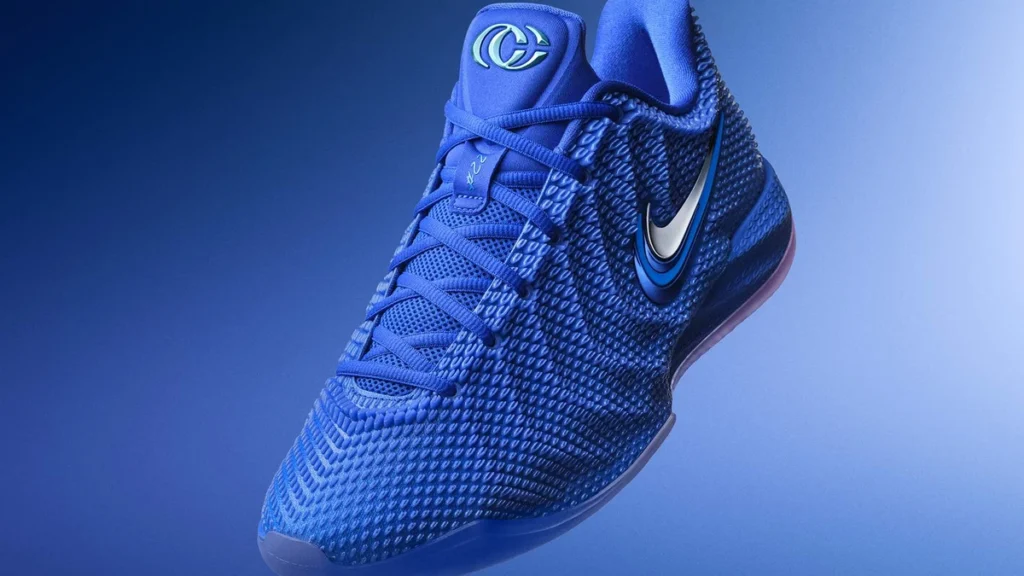
The Nike Caitlin 1, launched on 1 October 2026
The Nike Caitlin 1, launched on 1 October 2026
Nike spent $1.25 billion on what it calls demand creation in the three months to 31 August, 5% more than a year earlier, in a quarter when its revenue fell 4% to $11.2 billion. Demand creation is the line in Nike’s accounts that holds its brand marketing, and the rise means Nike marketing spend climbed to roughly 11.2% of revenue, up from about 10.1% a year ago, according to our arithmetic from the company’s income statement.
The Oregon-based sportswear group, listed on the New York Stock Exchange, reported the figures on 1 October alongside a new cost programme called Pace and a warning that revenue for the full fiscal year would fall by a high-single-digit percentage. The combination tells business owners a lot about how a brand under pressure is choosing to spend: more on a few chosen moments, less on overheads, and deliberately less supply of its most familiar products.
The Numbers Behind Nike’s Quarter
According to Nike’s results release, revenue for the first quarter of its 2027 fiscal year was $11.2 billion, down 4% on a reported basis and 5% on a currency-neutral basis, which strips out the effect of exchange-rate swings. Sales to retailers, which Nike calls wholesale, slipped 1% to $6.8 billion. NIKE Direct, its own stores and digital channels, fell 8% to $4.1 billion, with digital sales down 13% and Nike-owned stores down 5%. Converse, the canvas-shoe brand Nike owns, dropped 28% to $263 million.
Profitability held up better than the top line. Gross margin widened by 60 basis points to 42.8%, which Nike put down mainly to lower warehousing and logistics costs. Total selling and administrative expense fell 3% to $3.9 billion, because operating overheads dropped 6% to $2.66 billion on lower wage-related costs. Net income slipped 2% to $712 million, or 48 cents a share. Analysts had expected revenue of $11.32 billion and earnings of 43 cents a share, according to figures from CNBC cited by Yahoo Finance, so the company missed on sales and beat on profit.
That split is the point: overheads fell by roughly $170 million in the quarter while Nike marketing spend rose by about $64 million. The company is shrinking the cost of running itself while protecting the cost of being seen.
Where the $1.25 Billion Went
Nike’s release attributes the higher demand creation expense to “higher brand marketing expense, reflecting higher investment in key sports events”. On the earnings call, chief financial officer Dave Denton was more specific, describing “strong discipline on expenses in the quarter while increasing investments in demand creation associated with the World Cup”.
The football spending appears to have earned something back. Chief executive Elliott Hill told analysts that Nike doubled its World Cup team kit sales compared with the 2022 tournament, and that Global Football grew by strong double digits in all four of its geographic regions. Nike used the tournament to refresh how football products are presented in stores, and club football kit sales rose by high teens in percentage terms. Hill stressed why that matters commercially: club fans buy a new shirt season after season, long after the tournament is over.
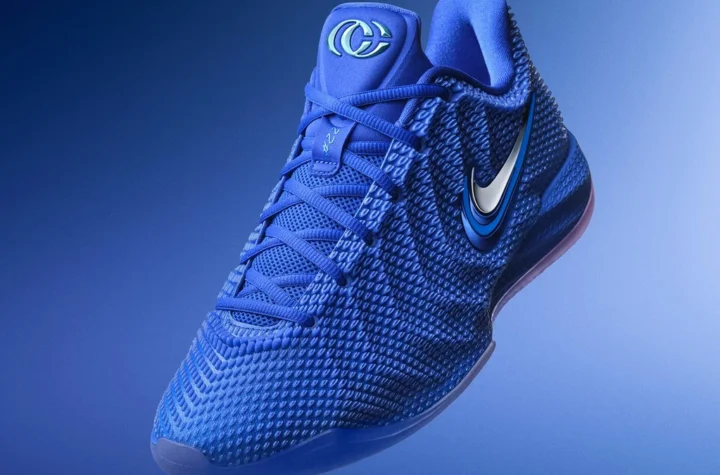
The second big bet launched on the day of the results. The Caitlin 1, the first signature shoe for the WNBA star Caitlin Clark, went on sale on 1 October in around 5,000 stores, which Hill said was twice the average footprint for a Nike Basketball signature shoe and the largest women’s signature launch in Nike’s history. It is backed by what he called Nike’s largest product campaign for the holiday season. Nike’s product page lists the shoe at $140 in North America, alongside an 18-piece apparel collection. Hill said Nike’s women’s signature basketball business grew nearly 500% between its 2022 and 2026 fiscal years, which explains why the company is willing to put this much weight behind one athlete.
Six Days of Nike in Austin
The most detailed example of the spending came from a college football weekend. Hill described how Nike turned the University of Texas game against Ohio State into what he called a broader consumer moment, running six days of activity on and around the Austin campus. Students joined guided runs along Lady Bird Lake, yoga sessions on the South Lawn and workouts in the Texas football weight room. Shoppers queued from 5:30 a.m. for a pop-up shop, Nike sold through fleece collections designed specifically for Texas, and it announced 13 new NIL athletes across eight sports.
NIL refers to the name, image and likeness rules that now allow American college athletes to earn money from endorsements, and Nike runs its programme for them under the name Blue Ribbon Elite. Hill said Nike has about 1,000 university partnerships in North America reaching more than 13 million students, and argued that no rival can surround a single event across running, training, football and lifestyle products in the same way.
For marketers the lesson is about concentration rather than volume. Nike did not spread its extra money thinly; it picked a tournament, a signature athlete and a campus weekend, and put everything it had into each.
Selling Less of Its Best-Known Shoes
The other half of the strategy runs in the opposite direction: Nike is choosing to sell less of some products. Hill said the company reduced revenue from the Dunk, one of its best-known lifestyle sneakers, by nearly 50% in the quarter, a planned cut that took roughly $200 million out of the Sportswear division. Sportswear, which accounted for just under half of revenue, fell by low double digits.
The Jordan Brand is getting the same treatment. Jordan made up 13% of Nike’s global business and its revenue fell by mid-teens in the quarter as Nike reduced the volume and frequency of its retro releases, re-issues of classic designs, after discussions with its wholesale partners. “When consumers see the Jumpman, it should feel special, it should feel earned,” Hill said. He added that North America would feel the biggest near-term impact.
Scarcity is a marketing tool as much as a supply decision. Fewer pairs, released less often, protect full-price selling and make each launch feel like an event, which is exactly the kind of moment the extra demand creation budget is designed to amplify. Hill also pointed to newer products that sold well, including Studio Fleece, which he said was the best-performing apparel collection across all of Nike in the quarter.
North America Is Carrying the Business
Geography explains why Nike can afford to be patient at home. North America, its largest market, grew 2% to $5.13 billion, led by running, global football and basketball, and wholesale sales in the region rose 9%, according to Yahoo Finance. Hill said performance products were selling through well at sporting goods chains including DICK’S, Academy and SCHEELS, as well as at specialty retailers.
Elsewhere the picture was weaker. Greater China fell 26% on a currency-neutral basis to $1.18 billion as Nike cut ties with online sellers whose heavy discounting it says damaged the brand, and EMEA, Nike’s Europe, Middle East and Africa region, declined 5%. Asia Pacific and Latin America was flat. North America, where the Austin weekend and the Caitlin 1 launch took place, is also the only major region still growing.
Pace and the Cost of a Leaner Nike
The quarter also introduced Pace, an operating-model overhaul that Nike expects to deliver about $2.5 billion in cumulative savings through its 2031 fiscal year. It will cost roughly $1.0 billion in pre-tax charges, mostly employee-related, on top of about $300 million of severance already recognised in fiscal 2026. Pace includes a modernised supply chain, a new campus in Bengaluru, India, a move from four regions to three, and, in Hill’s words, changes that will reduce the overall number of roles across the company over time.
Denton said Nike intends to reinvest a portion of the savings with discipline, and that selling and administrative costs should stay below last year’s level. That is the arithmetic that lets Nike keep marketing up while revenue is down: the money comes from headcount, layers of management and logistics rather than from the brand budget.
What Other Brands Can Take From It
Few businesses have Nike’s balance sheet, which ended the quarter with $8.4 billion in cash and short-term investments. But the pattern is relevant to any company cutting costs in a soft market. Nike protected the part of its spending that creates demand, aimed it at a small number of moments its customers already care about, and paid for it by trimming overheads and supply instead.
The company is not claiming the approach has worked yet. Nike guided to adjusted earnings of $1.15 to $1.35 a share for fiscal 2027, excluding about 15 cents of Pace charges, and its shares have lost more than 40% of their value since the start of 2026, according to Yahoo Finance. Not every company in this results season faces the same problem: while Micron cannot see the end of the memory shortage behind its own business, Nike is managing the opposite challenge of too much supply in its best-known lines. Nike will set out longer-term targets at an investor day in November, which will show whether higher Nike marketing spend in a falling-sales quarter was the start of a recovery or simply the cost of standing still.
About The Author




More Stories
Micron Cannot See the End of the Memory Shortage
The Ratchet Clause Keeping NZ Shop Rents High Is Now an Election Fight
Fewer Than 4% Opted Out of Ireland’s Auto-Enrolment Pension