
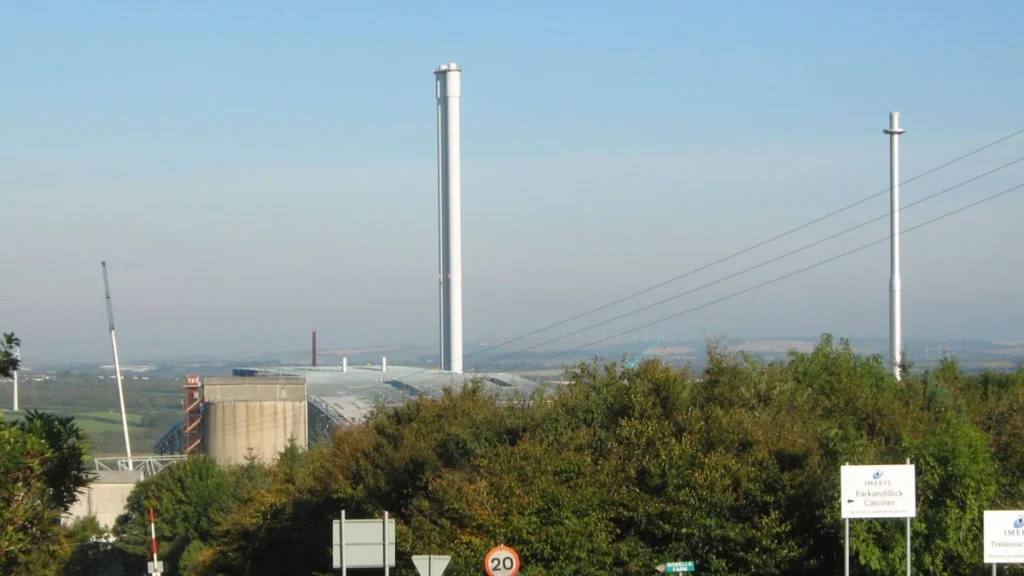
A carbon charge that would have added around £48 to the cost of burning a tonne of rubbish has lost its start date.
On 26 August the Department for Energy Security and Net Zero confirmed that expansion of the UK Emissions Trading Scheme to waste incineration will not take place in 2028 as originally intended. A new timeline, along with the full policy design, will be set out in due course.
That is a delay, not a cancellation, and the distinction matters more than it usually would. Nothing about the policy has been withdrawn. What has been removed is the one thing every affected organisation was planning against.
What the 2028 Date Was Attached To
The scheme would have put a price on the fossil-derived carbon released when residual waste is burned. In practice that means the plastics and textiles in a bin bag rather than the food, paper and garden waste alongside them, since only the fossil fraction counts.
Energy-from-waste plants would have had to hold allowances for those emissions, the same instrument that already covers power generation, energy-intensive industry and aviation. Under the timetable set out in the consultation response of July 2025, inclusion was due in 2028, with a voluntary monitoring, reporting and verification stage running from 1 January 2026 to get operators used to measuring what they burn.
That voluntary stage started on schedule and has been running for eight months. The measuring continues; the charge it was preparing everyone for does not arrive when it was meant to.
The Bill Councils Were Modelling
Local authorities do not run most of these plants, but they send waste to them under long contracts, so the cost lands on them either way.
A Local Government Association report last year put council costs at £747m in 2028, rising to £1.1bn by 2036, and up to £6.5bn across the period. The North London Waste Authority warned separately that the expansion could add £35m a year to disposal costs for north London residents alone.
These are not small sums against the budgets they sit in. Waste is one of the few genuinely non-discretionary services a council provides, which is why the LGA’s argument was less about the total than about what would be cut to pay it. Councillor Adam Hug, then the association’s environment spokesperson, said councils would have “little choice but to cut back valued local waste and recycling services”.
The pressure is familiar from elsewhere in council finances. Authorities are already stretched enough that their direct housebuilding has fallen to a few hundred starts a quarter, and a new billion-pound line item on a statutory service would have been absorbed by squeezing something else.
£48 a Tonne, and Who Pays It
The figure that best explains the reaction is a per-tonne one. A SUEZ report estimated the expansion would increase costs by around 50%, with gate fees rising by roughly £48 per tonne.
Gate fees are what a plant charges to accept a tonne of waste, and they are the number in every disposal contract. A 50% increase in the cost of the default route for non-recyclable rubbish is not an efficiency problem to be managed. It changes the arithmetic of every long-term contract signed against the old price.
In principle that is what a carbon price is supposed to do. Make the polluting route more expensive and the alternatives look better by comparison. The difficulty is that for genuinely non-recyclable residual waste, the alternative is landfill, which is worse on emissions and also carries a tax. The signal has nowhere obvious to push the material.
The cost also does not stop at the council. Commercial waste producers buy the same disposal capacity, so a gate fee rise reaches restaurants, manufacturers, retailers and offices through their waste contracts, generally with less visibility than a council budget line gets.
Relief Is Not the Same as a Plan
The sector’s response has been consistent in an unusual way: everyone welcomed the delay, and everyone immediately asked for the date back.
Gareth Rollings, chair of the Local Authority Recycling Advisory Committee, called it a “massive relief” for councils facing what he described as significant but still uncertain additional costs. Wendy Barratt, who chairs the ADEPT waste working group, said the original timeline “meant the potential ETS cost burden would have fallen largely on local authorities at a time when financial resources are already stretched”.
Dan Cooke, policy director at the Chartered Institution of Wastes Management, called it a sensible decision and then added the qualifier that runs through every response: “Clarification on a revised timeline and policy framework for ETS for EfW is required sooner, not later.”
The government appears to accept the point. Its own explanation was that “a lack of certainty regarding expansion of the UK ETS to waste incineration is undermining the ability” of councils and industry to plan and budget. That is an unusually direct admission, and it is also a description of the state the delay leaves everyone in, since uncertainty about a date in 2028 has been replaced by uncertainty about no date at all.
The Producer Argument
Underneath the timing dispute is a more substantial objection about who the charge lands on.
Hug’s criticism was that the scheme was “hitting the wrong target”: councils would pay for the fossil carbon content of products they did not design, while the producers who chose the plastic faced no additional incentive to use less of it. Rollings made the same point in operational terms, asking that the final design ensure authorities are not held liable for materials they did not produce and cannot remove from the waste stream.
The National Association of Waste Disposal Officers went further, arguing that measures to make producers reduce the fossil carbon content of their products should come before any new timeline for the ETS.
This is a real design question rather than special pleading. A carbon price works by reaching a decision-maker who can change behaviour. A council collecting whatever residents put in the bin has limited scope to change the plastic content of that bin, so the charge functions less as an incentive than as a transfer. Whether the government agrees will be visible in the revised policy design, not in the timing.
Northern Ireland Is Still Inside the EU Scheme
One consequence of the delay is a divergence that will not wait for the new timetable.
The UK and EU emissions trading schemes were linked in May 2025, and in July the EU confirmed it would phase municipal waste incineration into its own scheme between 2031 and 2034. Under the Windsor Framework, the EU scheme continues to apply to waste incinerators in Northern Ireland.
So the same activity will be priced on one side of the Irish Sea and not the other, on a timetable set in Brussels rather than London. For operators with plants in both jurisdictions, and for anyone modelling disposal costs across the UK, that is a compliance question that arrives regardless of what DESNZ decides next.
A Missing Date Is Its Own Cost
The commercial effect of the delay is easy to state and harder to price.
Energy-from-waste plants are long-lived capital assets, and the investment case for one is built on decades of contracted gate fees. Carbon capture retrofits, the main route to reducing the emissions the charge would have priced, are expensive projects that need a known carbon price to justify. Remove the date and those projects lose the number that made them add up.
Cooke’s observation that EfW handles the country’s non-recyclable waste and that around half the energy it generates counts as renewable is a reminder that these plants are not going away in the interim. They will keep operating, and keep emitting, on the current cost base.
There is also a competitive dimension. Britain’s industrial base already carries energy costs that in some sectors exceed the entire value added of the producer, so ministers are visibly reluctant to add another input cost while that argument is live. The waste sector is a smaller version of the same trade-off, and the delay reads as the government choosing not to resolve it yet.
For a business planning disposal costs, the practical position is that a roughly 50% increase in gate fees remains policy, remains unscheduled, and will arrive with what the government promises will be sufficient notice. Contracts signed now should assume it comes; budgets set now cannot say when. That is a worse basis for planning than a firm date in 2028 would have been, which is the one thing on which councils, operators and the department all appear to agree.
About The Author





More Stories
LearnUpon Secured $50m Without Selling a Single Share
La Cordée Is Closing With $13 Million Owed and 210 Jobs Lost
Pensioners Would Carry Half the Private Health Insurance Rebate Cut