
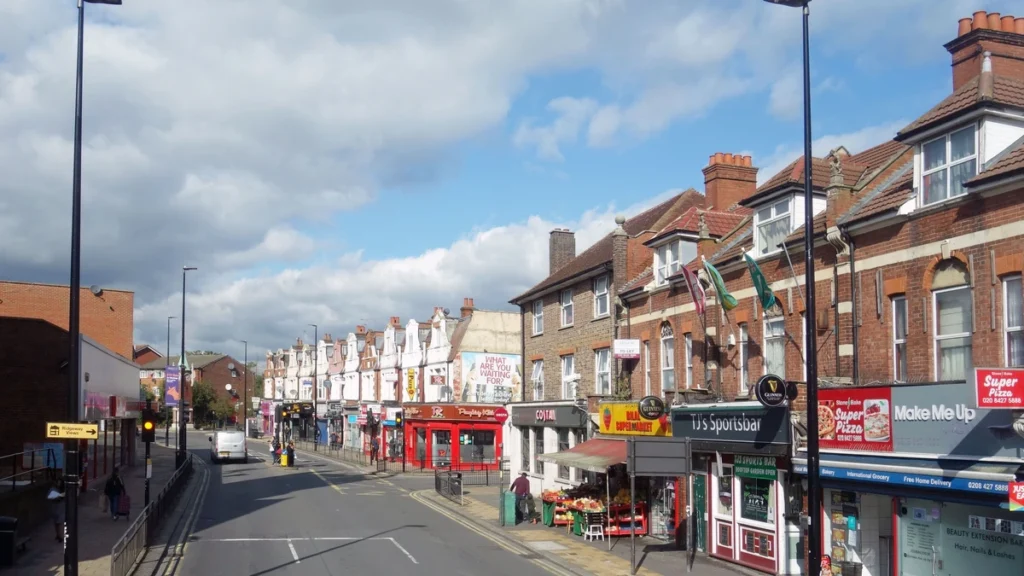
Mike Ashley has written to the Prime Minister to tell him that his plans for the high street are “delusional”, and that shops will be “further devastated” unless business rates are cut.
The letter, seen by TheIndustry.fashion, is blunt about what the Frasers founder thinks the government is doing instead of governing.
The Charge
“Rather than address the real underlying issues of how the country’s financial affairs are managed, and supporting growth and entrepreneurialism in business, it is easier for you to pick topics which provide good media soundbites and the old salve of yet more regulation,” Ashley wrote, “which is not what the country needs to become competitive.”
His diagnosis is narrower than the rhetoric suggests, and it names two things. “It is the disastrous business rates position (which I have raised many times over the years) and the dramatically increasing cost of employing people that are really causing business to struggle.”
He adds a consequence: “Ironically, this only leads to a further loss of jobs which is the opposite of what was intended.”
What Is Actually on the Table
The policy he is responding to is specific. The government has committed to a 20% reduction in business rates for pubs, clubs and live music venues, financed partly through higher taxation on large retail warehouses. It has also promised councils new powers to block vape and betting shops.
That funding mechanism is the part Ashley objects to most directly. If the answer is taxing larger retailers further in order to reduce rates for pubs and clubs, he argues, “then that is simply delusional”.
He acknowledged the commitment to look at business rates more broadly in the next Budget, but called it “too little, too late”.
The vape and betting shop powers are worth separating out, because they answer a different question. Blocking particular trades from taking units is a policy about what a high street looks like, not about whether occupying a unit is affordable. Both are legitimate aims, but a council empowered to refuse a vape shop still has no tool to make the vacant unit cheaper for anyone else, which is the gap Ashley’s letter is pointing at.
Where His Interest Sits
It is worth being direct about this, because it does not invalidate the argument and readers deserve to weigh it.
Frasers Group is precisely the kind of large retailer a warehouse levy would fall on. Ashley is not a neutral observer of a proposal to tax large retail operators in order to subsidise smaller hospitality venues; he runs one of the businesses that would pay.
That said, the two costs he identifies, rates and employment, are the two that most retail trading statements have been citing for some time, and they are not controversial as pressures. The dispute is over what to do about them and who should carry the cost of the remedy.
The employment cost point has a particular edge for a business of this shape. A retailer with a large estate and a large hourly-paid workforce is exposed twice over to changes in employment costs, once through headcount and again through the property that headcount occupies. That combination is why the same firms appear in both the rates debate and the wage-cost debate, and why they tend to argue the two are inseparable.
Harvey Nichols as the Challenge
Ashley put a specific question to the Prime Minister, using an acquisition as the example.
“In recent weeks, Frasers bought the iconic Harvey Nichols from the administrators to save yet another great British retailer from financial oblivion, bringing it back into British ownership,” he wrote. “My challenge to you is: how are you going to help turn Harvey Nichols around?”
Frasers took control on 13 August through an administration process. The deal covered six UK stores, the online business, inventory, international franchise agreements and more than 1,000 employees.
The rhetorical move is effective because it converts an abstract argument about tax policy into a live business with named liabilities and a headcount. Whatever one makes of the politics, a department store group emerging from administration is a reasonable test case for whether the operating environment supports recovery.
The £40m Line
Elsewhere in the letter Ashley raised store theft, which he estimated costs Frasers around £40 million a year.
That figure belongs in the cost conversation rather than beside it. Retail crime at that scale is a direct margin deduction that no rates relief addresses, and it falls on the same premises the policy is trying to keep open. A business absorbing £40 million of shrinkage annually is carrying something closer to a tax than a nuisance.
It is also a cost with no offsetting benefit anywhere in the economy, which distinguishes it from both rates and wages. Rates fund services and wages fund households; theft funds neither. For a policy conversation about the viability of physical retail, that makes it an unusually clean example of a burden that could be reduced without anyone else losing income.
It cuts across the targeting argument too. Retail crime does not respect the distinction between a pub and a warehouse operator, so a remedy aimed at it would reach the whole high street rather than one part of it at another part’s expense.
Downing Street’s Answer
The government responded by listing what it has already done rather than engaging with the funding argument.
“For too long, Westminster has not been working for people across Britain,” a Downing Street spokesperson said. “The Prime Minister has said he will lead a cost-of-living government. This means immediate action to provide the breathing space people need.”
The specifics offered were that in his first month in office the Prime Minister “has already removed VAT from household electricity bills, cut business rates for pubs, clubs and music venues and capped bus fares”, with a commitment to “build a new economy that backs British business, delivers growth in every postcode”.
Notably, that answer addresses household costs and the hospitality rates cut. It does not respond to the specific objection about who funds it.
Two Reasonable Positions
Stripped of the language, this is a disagreement about targeting rather than about diagnosis.
The government’s position is that hospitality venues are the most acutely distressed part of the high street and that a targeted cut delivers relief where it is needed fastest. That is defensible, and the 20% cut reaches around 32,000 pubs and clubs. The sector’s numbers support the claim of distress: restaurant groups grew sales 3% and lost 44% of their profit.
Ashley’s position is that a relief funded by a levy on other retailers moves the cost around the same high street rather than reducing it, and that the underlying burden on physical retail is the thing that needs to fall.
Both can be true at once. A targeted cut can be the fastest available help for the businesses closest to failure, and still leave the aggregate cost of operating a shop unchanged. Which matters more depends on whether the goal is preventing closures this year or making physical retail viable over a decade, and the letter and the response are answering different questions. Neither side, on this exchange, has engaged with the other’s.
About The Author



More Stories
LearnUpon Secured $50m Without Selling a Single Share
La Cordée Is Closing With $13 Million Owed and 210 Jobs Lost
Pensioners Would Carry Half the Private Health Insurance Rebate Cut