
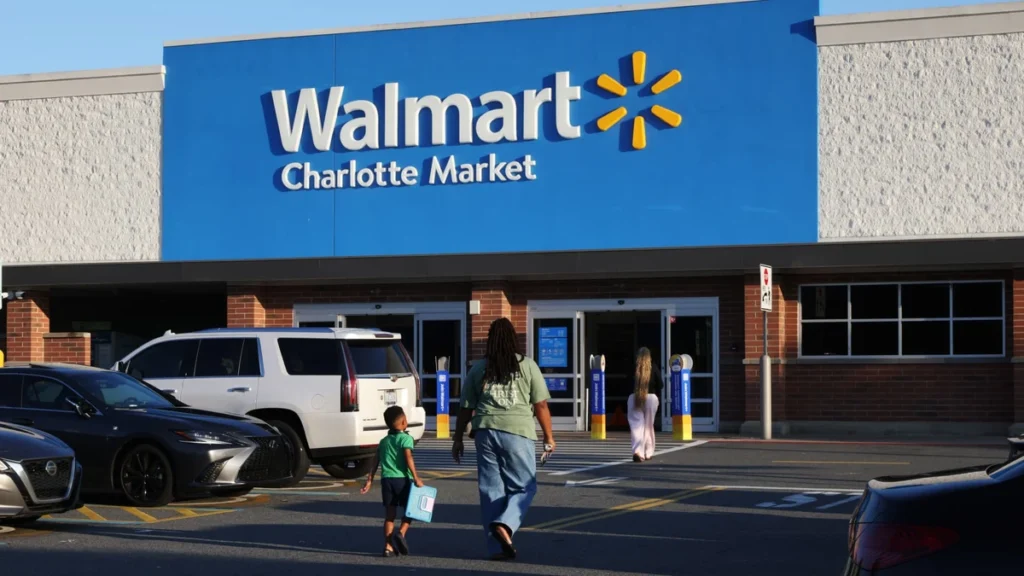
Shoppers head into a Walmart store in Charlotte, North Carolina
Shoppers head into a Walmart store in Charlotte, North Carolina
Walmart Connect, the advertising business Walmart runs in the United States, grew 36% in the three months to the end of October. Over the same period Walmart U.S. net sales rose 3.6% to $125bn. The world’s largest retailer is still growing its shops, but the business that sells ad space to the brands on its shelves is growing ten times faster.
The figures came in Walmart’s third-quarter results on 19 November, alongside a raised outlook for the full year. For anyone who sets a marketing budget, the more telling number is not the headline revenue but how quickly the retailer has turned its shoppers into an audience that brands pay to reach.
What Walmart Reported on 19 November
Walmart’s fiscal year runs to the end of January, so the quarter to October is its third. According to the company’s earnings release filed with the US Securities and Exchange Commission, revenue rose 5.2% to $188.8bn, or 4.5% in constant currency, which strips out the effect of exchange-rate moves. Operating income rose $1.1bn, or 16.0%. Global e-commerce sales grew 17%, and Walmart U.S. e-commerce grew 23%.
Advertising was the standout line. Walmart’s global advertising business grew 25%. In the United States, advertising grew 37% including VIZIO and Vibe, and Walmart Connect grew 36% excluding them. The release notes that the advertising business is recorded either in net sales or as a reduction to cost of sales, depending on the nature of each arrangement, which is one reason a small revenue line can move profit so noticeably.
Comparable sales at Walmart U.S., which measure stores and digital operations open for at least a year, rose 2.9% excluding fuel. Membership fee revenue grew 17% globally, helped by a new bundle that combines Walmart+ and Sam’s Club Plus for $120 a year. Chief executive John Furner said in the release: “We delivered strong results, growing our core business and gaining market share.”
Why Advertising Is Outrunning the Shop Floor
A retailer’s ad business grows with its digital traffic, and Walmart’s digital traffic is growing much faster than its stores. E-commerce at Walmart U.S. rose 23%, and the release credited advertising and marketplace sales, alongside store-fulfilled delivery, for that strength. Every extra online order is another search, another product page and another chance to show a sponsored listing.
Furner put the company’s direction in the same release: “From membership and agentic shopping to new ways of using our stores and delivery network, we’re bringing the best of Walmart together to serve customers better and create new opportunities for growth.” He also told CNBC that Sparky, Walmart’s artificial intelligence shopping assistant, has led to customer basket increases of 40% on average, with adoption picking up ahead of the holiday season.
Chief financial officer John David Rainey framed the quarter around profitability. “This was another really solid quarter for us, we feel good about it,” he told CNBC. “We continue to gain share while continuing to improve the profitability of our digital businesses.” The release points the same way: it attributed a 50 basis-point rise in the gross profit rate at Walmart U.S. primarily to an improved business mix, in a quarter when advertising was its fastest-growing line.
How Big Walmart’s Ad Business Has Become
The growth rate is striking, but the base matters for any marketer comparing channels. In its results for the year to January 2026, Walmart said its global advertising business grew 46% to nearly $6.4bn including VIZIO. In the final quarter of that year, Walmart Connect in the United States grew 41%.
The obvious comparison is Amazon. In its third-quarter filing, covering July to September, Amazon reported advertising services revenue of $19.6bn, up 11% on a reported basis and 12% excluding exchange-rate changes. Amazon’s category covers sponsored ads, display and video advertising sold to sellers, vendors, publishers, authors and others.
Put side by side, Amazon sells roughly three times as much advertising in a single quarter as Walmart sold in a whole year, while Walmart is growing at two to three times Amazon’s pace. The two quarters do not line up exactly, and Amazon said its own growth rate was affected by timing differences linked to Prime Day, so the comparison is a guide to scale rather than a precise race. It still describes the market accurately: one dominant retail ad seller and a fast-growing challenger that brands increasingly have to budget for.
Why the Global Number Looked Slower
Walmart’s global advertising growth of 25% was lower than its US figure because of India. Flipkart, Walmart’s Indian e-commerce business, holds its Big Billion Days sale each year, and this year’s event fell outside the comparable quarter. The release said that timing cut Walmart International’s net sales growth by about 500 basis points, or five percentage points, with a corresponding benefit expected in the fourth quarter.
Within Walmart International, e-commerce sales fell 2% and the advertising business fell 15%, both affected by the timing of the sale. Walmart said it expects international e-commerce and advertising to grow at a similar rate in the second half of the year as in the first half. For a reader tracking the US market, the 36% Walmart Connect figure is the cleaner measure of where the business is heading.
What the Numbers Mean for Marketing Budgets
For brands that sell through Walmart, the results confirm a shift in where marketing money competes. Retail media, the industry term for advertising sold by retailers on their own websites, apps and channels, has two features that general advertising struggles to match: the ad appears at the moment a shopper is deciding what to buy, and the retailer can see whether a purchase followed. That makes it easier for a brand manager to justify the spend to a finance team, and it is why a retailer’s ad growth can run far ahead of its sales growth.
The trade-off is cost and concentration. Money spent on a retailer’s network is money not spent on search engines, social platforms or television, and the more brands crowd into the same sponsored slots, the more those slots cost. Smaller brands also face a choice about how much of their budget to tie to one retailer’s platform. Walmart’s results do not settle those questions, but they show that a growing share of US marketing spend is being asked to answer them.
The agentic shopping Furner mentioned adds another variable. If more shoppers ask an AI assistant to fill a basket, the brands that appear in those recommendations, and how a retailer charges for that visibility, will matter more to marketing teams than they do today. The results did not say how advertising will work inside Sparky, so any marketer planning for it is working ahead of the evidence.
What to Watch Through the Holiday Quarter
Walmart raised its guidance for the year to January 2027. It now expects net sales to grow 4.9% to 5.2%, up from 4% to 5%, and adjusted operating income to grow 8% to 8.6%, up from 7% to 8.5%, with adjusted earnings per share of $2.84 to $2.89. Rainey told CNBC he is optimistic about consumer spending heading into the holidays and that the fourth quarter is off to a pretty good start.
The retailer is leaning on price to keep traffic coming. It said it had rolled back prices on nearly 8,000 products, and Furner told CNBC that higher diesel and transport costs were feeding into the cost of goods. “So we’re hoping to see these costs come down as soon as possible, and we’ll keep prices as low as we can,” he said. Those pressures sit against a softer backdrop for shoppers: US consumer spending stalled in September even as GDP grew.
For marketers, three things are worth tracking over the next quarter. The first is whether Walmart Connect keeps growing in the mid-thirties as holiday traffic peaks. The second is whether the Flipkart timing benefit lifts the global advertising figure, as Walmart expects. The third is whether the company starts to say how advertising will work in its AI shopping tools, which would tell brands where the next round of retail media spending is likely to go.
About The Author





More Stories
Nvidia Says No to Jensen Huang After a $115.8 Billion Quarter
NZ Lawyers Want Fewer Friday Settlements After a Microsoft Outage
Irish Firms Must Now File Gender Pay Gap Reports on One State Portal