
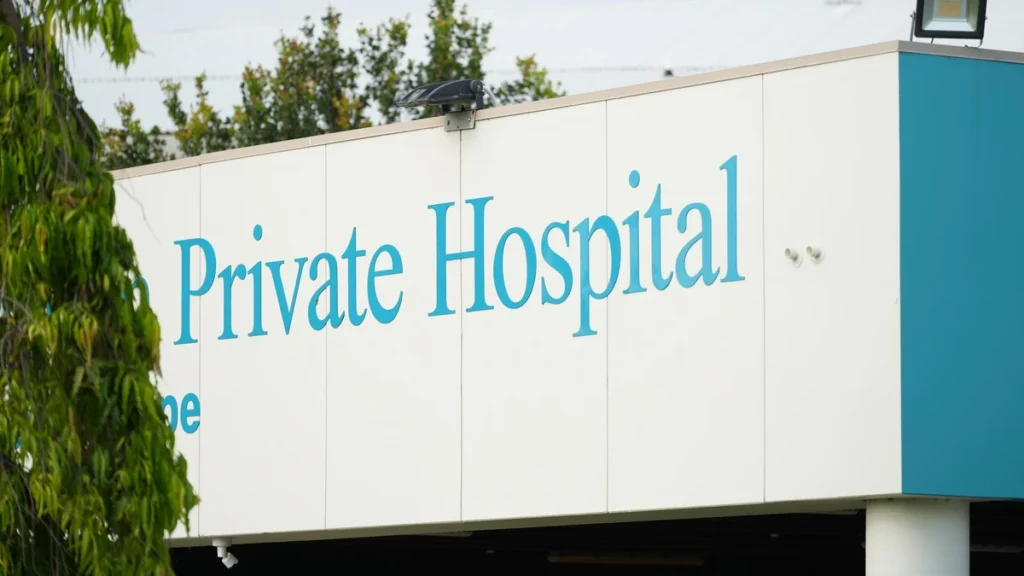
Australia’s competition regulator has cleared Calvary Health Care to buy 14 private hospitals from Healthscope, the collapsed hospital operator that has been run by receivers since May 2025. The Australian Competition and Consumer Commission (ACCC), the national body that reviews mergers and acquisitions, approved the purchase on 25 November, 27 days after it was notified. Even so, the handover the parties had targeted for 30 November will not happen on that date.
The approval clears the biggest hurdle in the break-up of Healthscope, whose 25 remaining hospitals are being shared among four operators. What is left is a set of state hospital licences, a mandatory waiting period and, for patients at some sites, a change in which services are offered, because Calvary runs its hospitals under a Catholic code of ethics.
What the ACCC Approved and Why It Said Yes
The ACCC was notified of the deal on 29 October, according to the ABC, and approved it on 25 November. Mergerloop, which tracks the regulator’s merger reviews, lists the buyers as Little Company of Mary Health Care Limited and LCMHC 2 Limited, the entities behind Calvary, and records the approval as a Phase 1 decision with no conditions mentioned.
The package is larger than the hospitals alone. Calvary is taking six hospitals in New South Wales (Norwest Private, Lady Davidson Private, The Hills Private, The Sydney Clinic, Newcastle Private and Hunter Valley Private), four in Victoria (John Fawkner Private, Melbourne Private, The Melbourne Clinic and Dorset Rehabilitation Centre), two in Queensland (Brisbane Private and Peninsula Private), Darwin Private in the Northern Territory and Griffith Rehabilitation Centre in South Australia. It also takes Healthscope Independence Services, which runs 13 supported independent living sites, and Healthscope’s head office and corporate support functions.
The regulator’s reasoning was blunt. “There was no real likelihood of any operator other than Calvary buying the 14 hospitals,” an ACCC spokesperson said, as reported by CathNews. “The ACCC recognises the importance to local communities of keeping these hospitals open,” the regulator added. CathNews reports that the ACCC noted the hospitals were unlikely to stay open without Calvary and that some services would probably have stopped regardless.
Why the 30 November Handover Slipped
The 30 November target came from the sale agreements announced in September, which were always subject to regulatory approval. Earlier in November Calvary said the handovers would be delayed, and the ACCC explained why the original date could never be met. “There is no scenario in which, if approved by the ACCC, this acquisition could proceed by 30 November,” an ACCC spokesperson told the ABC. Once the regulator approves a deal under Australia’s mandatory merger laws, a 14-day waiting period applies before it can complete.
Calvary has said the timing is out of its hands. A spokesperson told the ABC the organisation “has no influence on the ACCC’s assessment timelines” and that “Calvary and other parties are working closely to agree on a new date”. No new date had been announced when the ACCC gave its approval.
The delay drew a political response in the Northern Territory, where Darwin Private Hospital is part of the package. Health Minister Steve Edgington said the hospital would keep “running as usual” and that the handover date was being reset for all 14 hospitals. “That is normal for a commercial sale this size, which needs regulatory approval, including from the ACCC,” he told the ABC. Opposition Leader Selena Uibo said: “Steve Edgington needs to work with Calvary to resolve the outstanding approvals.”
How Healthscope’s 25 Hospitals Were Shared Out
Healthscope entered receivership in May 2025. Receivers are appointed to take control of a business and sell its assets, and here that job fell to McGrathNicol Restructuring. On 15 September the receivers announced agreements to transfer the remaining 25 hospitals to four operators, according to a Healthscope statement.
Calvary leads with 14 hospitals. Healthe Care takes six (Prince of Wales Private, Knox Private, The Victorian Rehabilitation Centre, Northpark Private, The Geelong Clinic and Ringwood Private), ACURIO Health takes three (Nepean Private, Campbelltown Private and Sydney Southwest Private) and KnG Group takes two (Sunnybank Private and Pine Rivers Private). Healthscope said more than 14,000 frontline staff work across the hospitals and that more than 500,000 Australians are treated in them each year.
“We are pleased to announce agreements have been reached which provide certainty and continuity of services to Healthscope patients,” Keith Crawford said on behalf of the receivers in the September statement. Healthscope chief executive Nicole Waldron said: “While we are disappointed that our bid to become a For Purpose organisation was not successful, we are committed to working collaboratively.” Calvary chief executive Damien Bruce, speaking for the buying consortium, said the deal showed “what can be achieved when organisations work beyond individual interests”.
Other Healthscope sites had already moved before the September agreements. The statement noted that Northern Beaches Hospital had transitioned to public ownership and that three Adelaide hospitals were in discussions with the Adelaide Community Healthcare Alliance.
The Services That Change Under Calvary
The part of the deal drawing most public attention is clinical rather than financial. Because Calvary operates under a Catholic code of ethics, IVF, elective abortions, voluntary assisted dying and gender reassignment procedures will stop at the acquired hospitals where they were offered, the ABC reported on 25 November. CathNews put it this way: “Under Calvary ownership, reproductive services previously available at some of the hospitals will cease.”
New South Wales moved first to fill one gap. Health Minister Ryan Park said the public John Hunter Hospital would give surgical theatre access to the IVF services that had used Newcastle Private Hospital, where Hunter IVF has operated for more than 20 years. “This solution will be in place for as long as is necessary,” Park said, adding: “I didn’t want them going into Christmas without some sort of certainty.”
One fertility specialist welcomed the response while questioning the wider model. “There seems to be a willingness on the part of NSW Health now to help us find a solution,” Newcastle gynaecologist and fertility specialist Dr Susan Winspear told the ABC. She also said that restricting large amounts of private women’s health care was not a good model.
Not every change is a reduction. In Darwin, the NT health minister said Calvary’s transition would include bringing back private maternity services at Darwin Private Hospital, which Healthscope closed in 2025 citing high costs and falling birth rates, the ABC reported.
What Staff and Patients Can Expect Meanwhile
Until the transfer completes, the hospitals keep operating under their current management. In Darwin the minister’s advice to patients was direct: “Patients with procedures booked should keep their appointments.” No hospital closure is planned as part of the transition, according to the ABC.
Calvary says it is working through the remaining steps. “We will continue to work with the receivers to secure the remaining approvals and complete the transaction safely,” the organisation said, as reported by CathNews. “We are also working closely with treating specialists to support continuity of care.” Calvary added that it looked forward to “welcoming Healthscope’s corporate, nursing, medical, allied health and support staff”.
For staff, the September agreements promised continuity of operations and job certainty for frontline employees at each hospital. The remaining approvals sit with the states and territories, which licence private hospitals in their own jurisdictions, so the timing will now depend on several governments rather than one regulator.
What the Healthscope Deal Shows About Australian Hospitals
Three things stand out for business owners and investors watching the sector. The first is speed: the ACCC took 27 days to clear a 14-hospital acquisition under Australia’s mandatory merger laws, a sign that a rescue deal can clear the federal stage quickly even when state licensing takes longer.
The second is the shape of the market. The regulator’s own finding that no operator other than Calvary was likely to buy the 14 hospitals says a great deal about the appetite for large private hospital portfolios after Healthscope’s collapse. Healthscope’s management had bid to turn the business into what Waldron called a For Purpose organisation, a bid she said was not successful, before the receivers split it four ways.
The third is that ownership shapes what a hospital offers. The services that stop under Calvary, and the maternity service it plans to restore in Darwin, show how a change of owner can change the menu of care in a region, with state governments stepping in where gaps open. Hospitals are not the only Australian industry being reshaped around new owners and domestic capacity, as the green steel mills racing to replace imported rebar show. For the 14 hospitals, the next milestone is a completion date, and Calvary and the receivers have yet to name one.
About The Author



More Stories
Biffa Hands Its Top Job to the Former Head of British Gas
Walmart Connect Grew 10 Times Faster Than Walmart’s US Sales
Nvidia Says No to Jensen Huang After a $115.8 Billion Quarter