
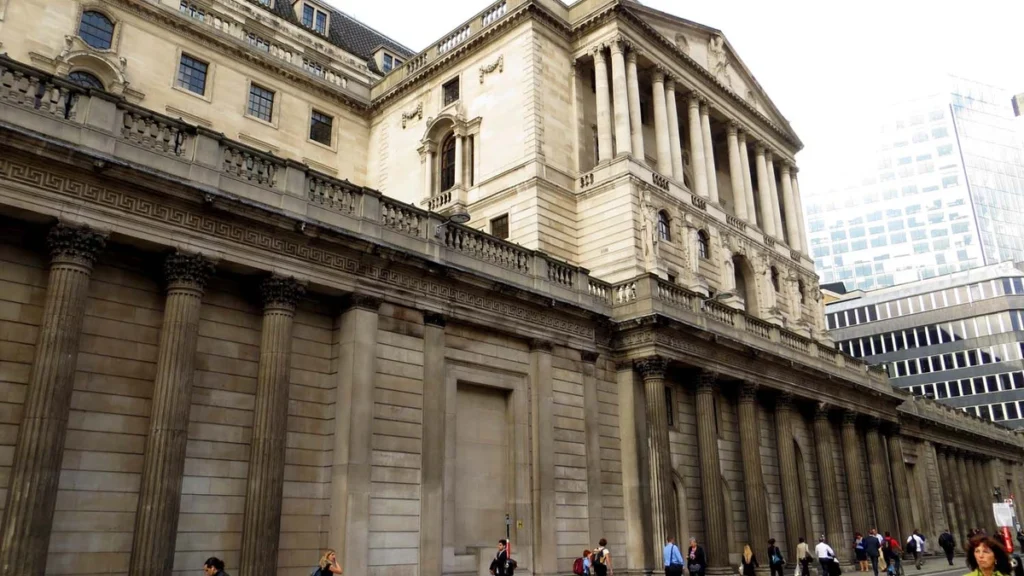
The Monetary Policy Committee held Bank Rate at 3.75 per cent on 29 July. It did so by six votes to three, with the three dissenters preferring an immediate quarter-point rise to 4 per cent. That is a narrow margin to hold a rate steady in a month when inflation had just fallen to its lowest reading in a year and a half.
For a business planning its borrowing, its pay round or its energy contract, that split is the more useful piece of information than the decision itself. It says the committee is not reading the June inflation figure as the end of the argument. It is reading it as the calm before an energy shock that has not finished passing through.
What the June Numbers Actually Showed
The Office for National Statistics reported that CPI rose by 2.6 per cent in the twelve months to June 2026, down from 2.8 per cent in May. On a monthly basis prices rose 0.1 per cent, against 0.3 per cent in the same month a year earlier. CPIH, the broader measure including owner occupiers’ housing costs, fell from 3.0 to 2.8 per cent.
The composition was encouraging rather than merely the headline. Core CPI, which strips out energy, food, alcohol and tobacco, was unchanged at 2.6 per cent. Goods inflation slowed from 2.0 to 1.7 per cent and services inflation eased from 3.7 to 3.6 per cent. Services is the measure the Bank watches most closely, because it carries domestic wage costs rather than imported prices, and it has now come down from 4.4 per cent at the start of the year.
Transport and food did most of the work. Transport inflation slowed from 6.8 per cent in May to 5.7 per cent in June on lower motor fuel prices, diesel in particular. Food inflation eased from 2.2 to 1.7 per cent, its lowest since August 2024. At 2.6 per cent, June was the lowest CPI reading since December 2024, with the single exception of March 2025 when it also touched 2.6 per cent.
One line in that data runs the other way, and it matters for anyone in consumer-facing business: restaurants and hotels inflation rose, from 4.2 to 4.4 per cent.
Why Three Members Wanted to Move Anyway
The committee’s own account of the meeting explains the dissent without needing much interpretation. In its July monetary policy summary and minutes, the Bank records that CPI “is expected to rise later this year as the effects of higher energy prices continue to pass through”, and that the committee “judges that the risks to the inflation outlook are tilted to the upside relative to the central projection in the July Monetary Policy Report”.
The disagreement is not about what has happened. All members accepted that there had been sustained disinflation before the conflict in the Middle East, driven by moderating services and food prices, slowing wage growth and a soft labour market. The disagreement is about what that history tells you. For most members, past disinflation reflected genuine slack in the economy that will keep inflation persistence in check. For others, the minutes note, it was “either not informative about future inflation, or in spite of it there was a significant risk of second-round effects taking hold”.
Second-round effects are the whole argument. A one-off rise in energy prices raises the price level and then drops out of the annual comparison. It only becomes a monetary problem if it works its way into wage settlements and into the prices firms set for everything else. The committee agreed there is little evidence of that so far, but also that, given the lags involved, an absence of evidence this early is not a strong signal. Indications of 2027 pay settlements have not yet arrived.
The Energy Shock Is the Whole Argument
The numbers behind the caution are specific. At close of business on 28 July, the Brent crude front-month future stood at $84 a barrel and the UK front-month natural gas future at 136 pence per therm, both materially above pre-conflict levels. Motor fuel alone contributed 0.6 percentage points to the June CPI figure of 2.6 per cent.
All members agreed that risks to energy price paths remain skewed to the upside, with repeated re-escalations capable of prolonging the volatility. The Bank notes that releases from strategic oil reserves and substitution between energy sources have restrained more acute oil price rises, but cannot mitigate the shock indefinitely. Gas and refined product prices, the ones that actually reach a company’s meter and its fleet, have been less tempered by those mitigants because of supply constraints.
That distinction is worth holding on to. The barrel price is the number in the headlines; the therm price and the pump price are the numbers in the overheads. Pump prices have risen sharply since mid-July, diesel especially, which will show up in transport inflation over the coming months and in the delivery costs of firms that never buy a barrel of anything.
The minutes also flag two global pressures that sit outside the energy story. Trade diversion caused by higher global tariffs is currently pushing UK inflation down. Pulling the other way is strong demand for AI-related components, which the Bank identifies as creating sector-specific price pressures. That is the industrial-scale spending we examined in our report on record AI capital spending and the July chip selloff, now showing up as an input-cost risk in a central bank’s inflation assessment.
What the Treasury Is Doing to Blunt It
Fiscal policy has moved in the opposite direction to the hawks on the committee. VAT on domestic electricity in Great Britain will be cut from 5 per cent to zero for six months, from October 2026 to March 2027, at a cost of around £850 million, funded by cancelling the digital ID programme. The Treasury expects the measure to “take around £45 off the yearly Ofgem price cap in October” and to reduce CPI inflation by 0.1 percentage points.
For consumer-facing businesses there is a second measure with a longer tail. Business rates will be cut by 20 per cent for around 32,000 pubs, clubs and smaller live music venues from April 2027, saving a typical pub an estimated £1,100 in that financial year. That sits on top of the permanently lower business rates multipliers already introduced for retail, hospitality and leisure properties. A temporary scheme also cuts VAT from 20 to 5 per cent between 25 June and 1 September 2026 on eligible children’s meals, family entertainment tickets and admission to attractions.
Measures of this kind cut both ways for the committee. They lower measured inflation directly, which helps the headline. They also support demand, which is precisely what a hawkish member worried about second-round effects would rather not see.
What It Means for Business Costs
Three practical points follow for a firm setting its budget.
The first is that the cost of borrowing is not obviously falling from here. A 6-3 hold with the dissents on the hawkish side is not the shape of a committee preparing to cut. Any plan built on cheaper money within the next two quarters is built on an assumption the Bank has declined to endorse.
The second is that energy and fuel should be treated as a live variable rather than a settled line. The Bank’s own framing is that the appropriate policy stance “will depend on the scale and duration of the shock, and how it propagates through the economy”. A firm with fleet costs, cold storage or energy-intensive production has more exposure to the next few months than the headline inflation rate suggests.
The third concerns pay. The committee has said openly that 2027 settlements are the indicator it does not yet have. Employers setting those settlements are, collectively, the second-round effect the Bank is watching for. That makes the coming pay round unusually consequential, not only as a cost line, but as an input into whether rates rise.
What to Watch Before September
The next MPC announcement is on 17 September. Between now and then the committee will see July and August inflation, further pay data and whatever the energy market delivers.
The June figure told a genuinely improving story: core steady, services easing, food at a two-year low, goods slowing. The vote told a different one. When a committee holds by a single-vote margin in the month its target measure falls, the decision it is really signalling is about the months it cannot yet see. On the Bank’s own projection, inflation rises from here before it falls.
This article is reporting on monetary policy and economic data and does not constitute investment or financial advice.
About The Author





More Stories
LearnUpon Secured $50m Without Selling a Single Share
La Cordée Is Closing With $13 Million Owed and 210 Jobs Lost
Pensioners Would Carry Half the Private Health Insurance Rebate Cut